Juan Andrés Rujana is a Venezuelan designer working between Amsterdam, Caracas, and New York. He is currently a designer at Mijksenaar, where he brings a global perspective shaped by years of living across different countries and cultures.
Drawing on his roots, Juan explores how cultural identity can shape objects, spaces, and systems.
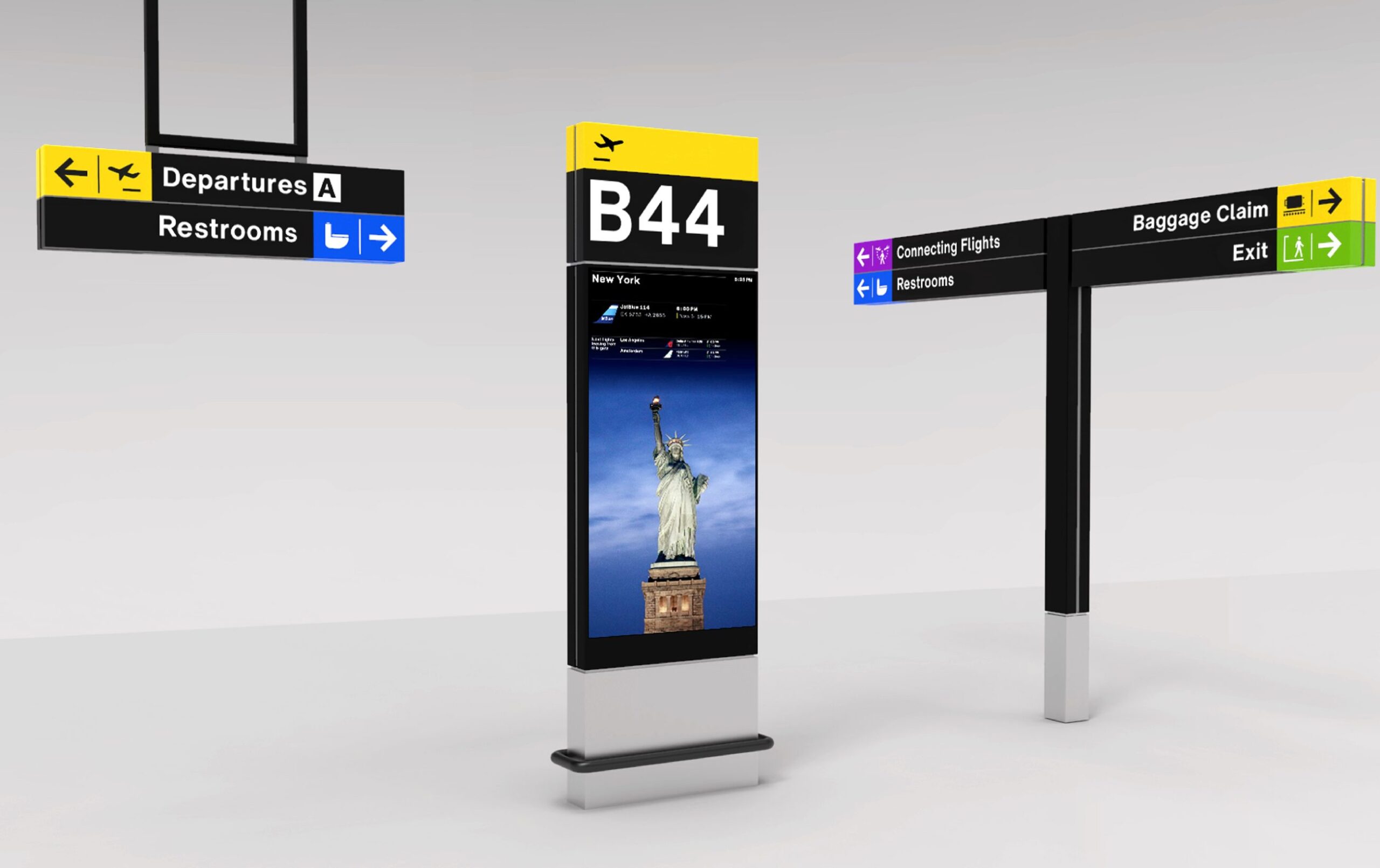
End-to-end strategy and implementation for three major New York and New Jersey airports, creating a unified passenger experience across JFK, Newark, and LaGuardia.
This project is confidential—contact me to learn more.
Personal work →
Digital precision and organic growth
An experimental exploration of the tension between digital precision and organic unpredictability. Using 3D-printed molds, I grew mycelium within rigid, computer-modeled geometries—investigating how living material responds to and transforms manufactured forms.
The project examines the contrast between controlled, parametric shapes and the chaotic, adaptive nature of biological growth.
Sunset hues
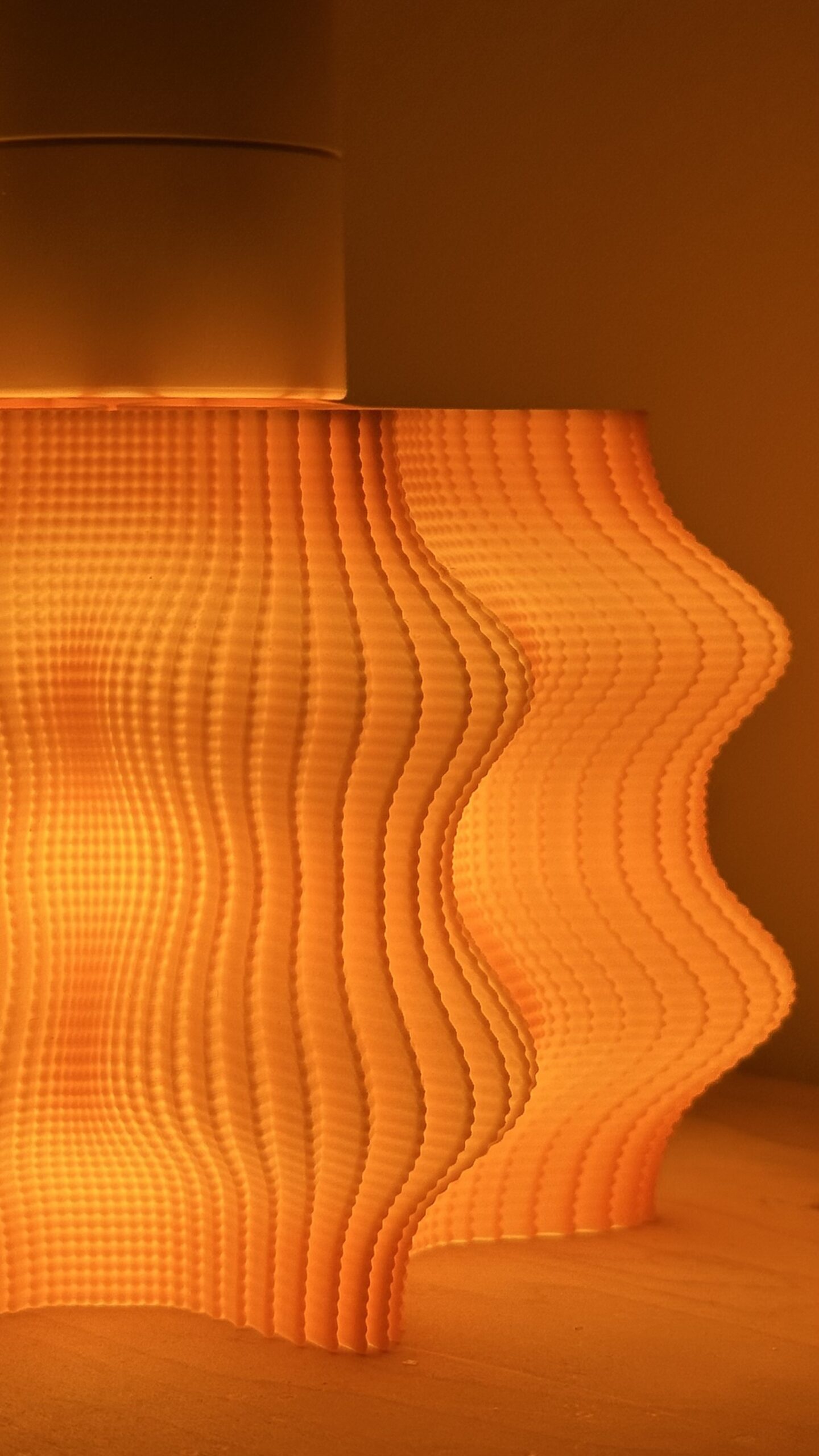
Designed using a direct gcode editor, removing the need for modeling and slicing before 3D printing.
Minnesota United FC x Epimonia
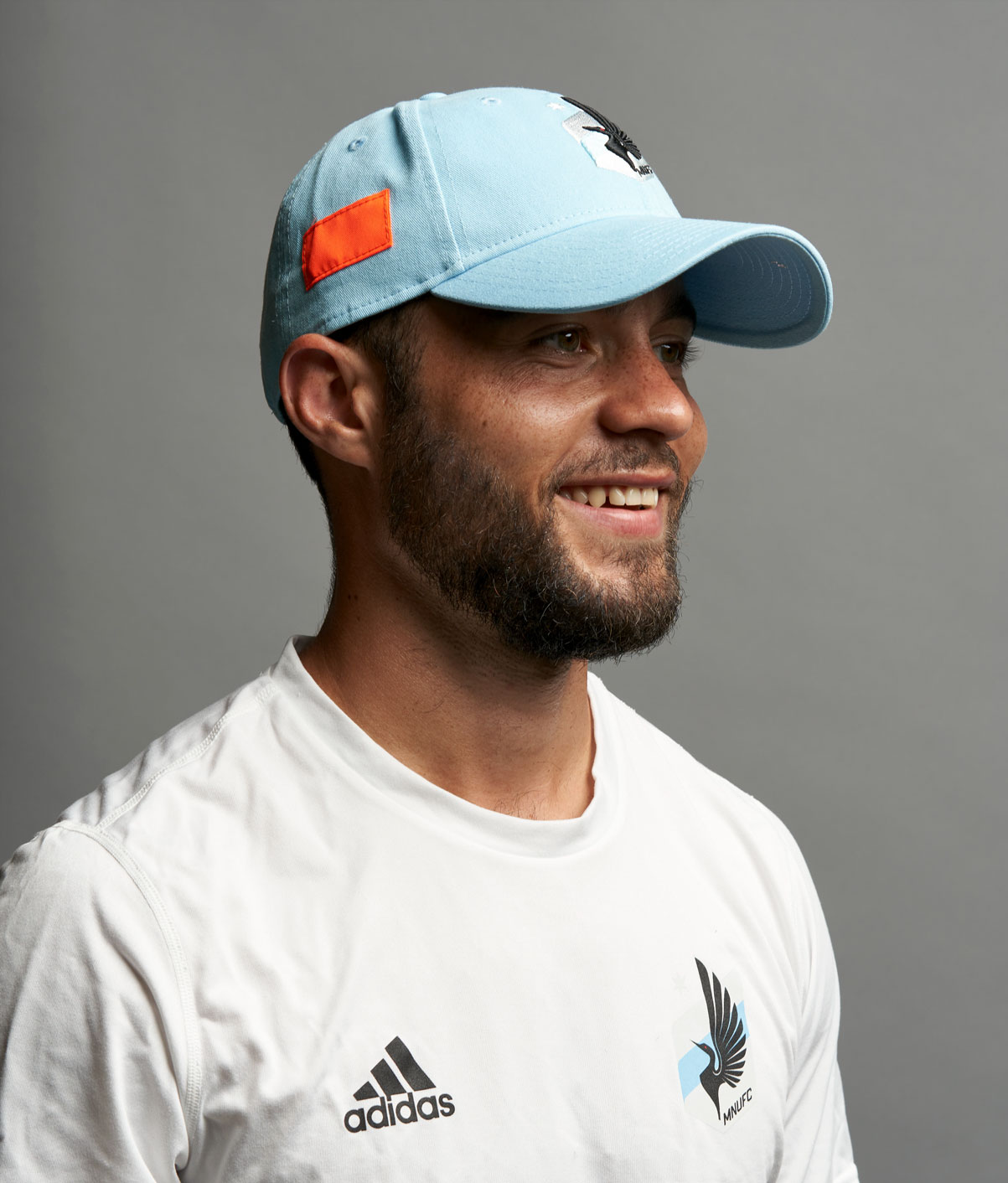
Where sport becomes a canvas for human stories. A creative collaboration translating Epimonia’s refugee crisis advocacy into visual identity worn by an MLS club.
Made by refugees
A fashion film and creative direction for Epimonia’s sustainable 2021 collection, debuted at New York Fashion Week. Craft and authorship as an act of dignity.
EpimoniaLab
A new visual identity and digital experience for Epimonia’s next chapter. Branding and UI/UX design built to hold a complex story with clarity and intention.
School work →
Designing comfort into flying
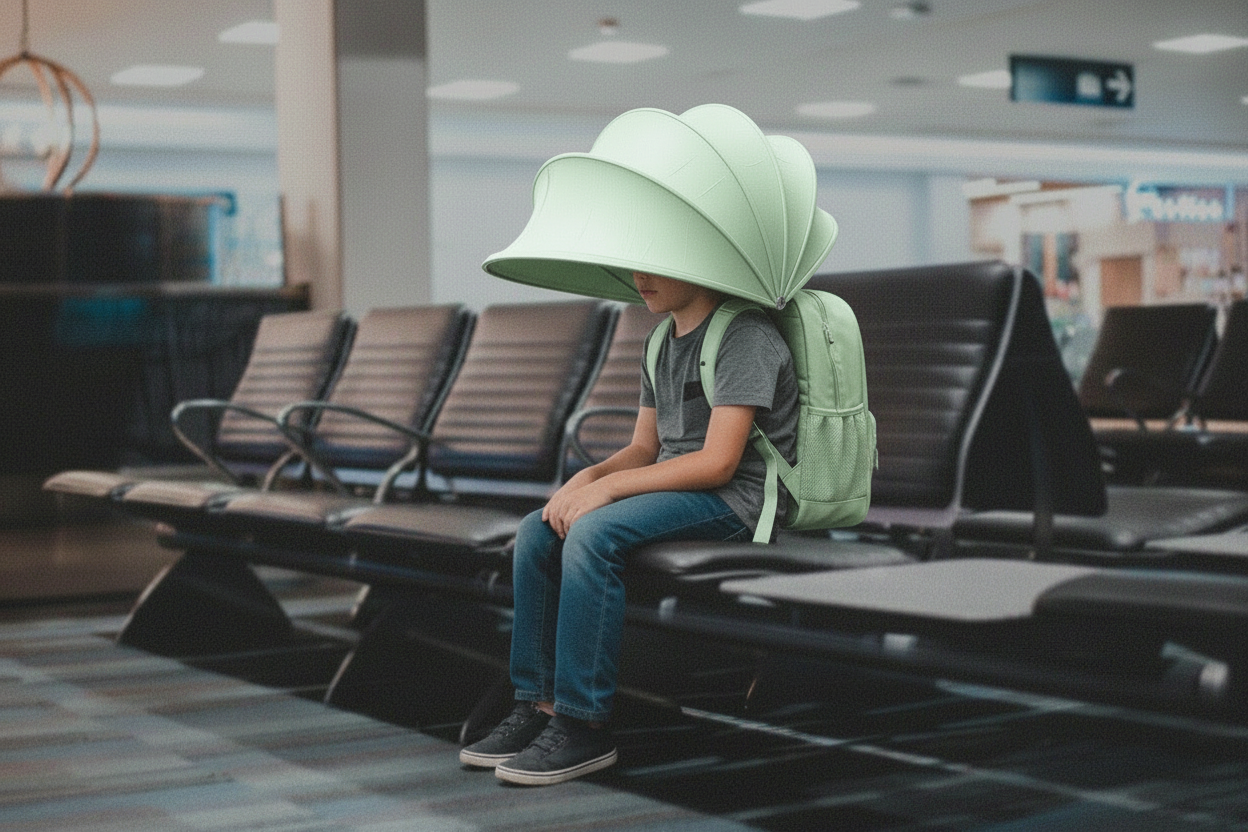
Research-led design project reimagining how travel can feel safer and more reassuring for children with sensory sensitivities — through a backpack that transforms into a personal space.
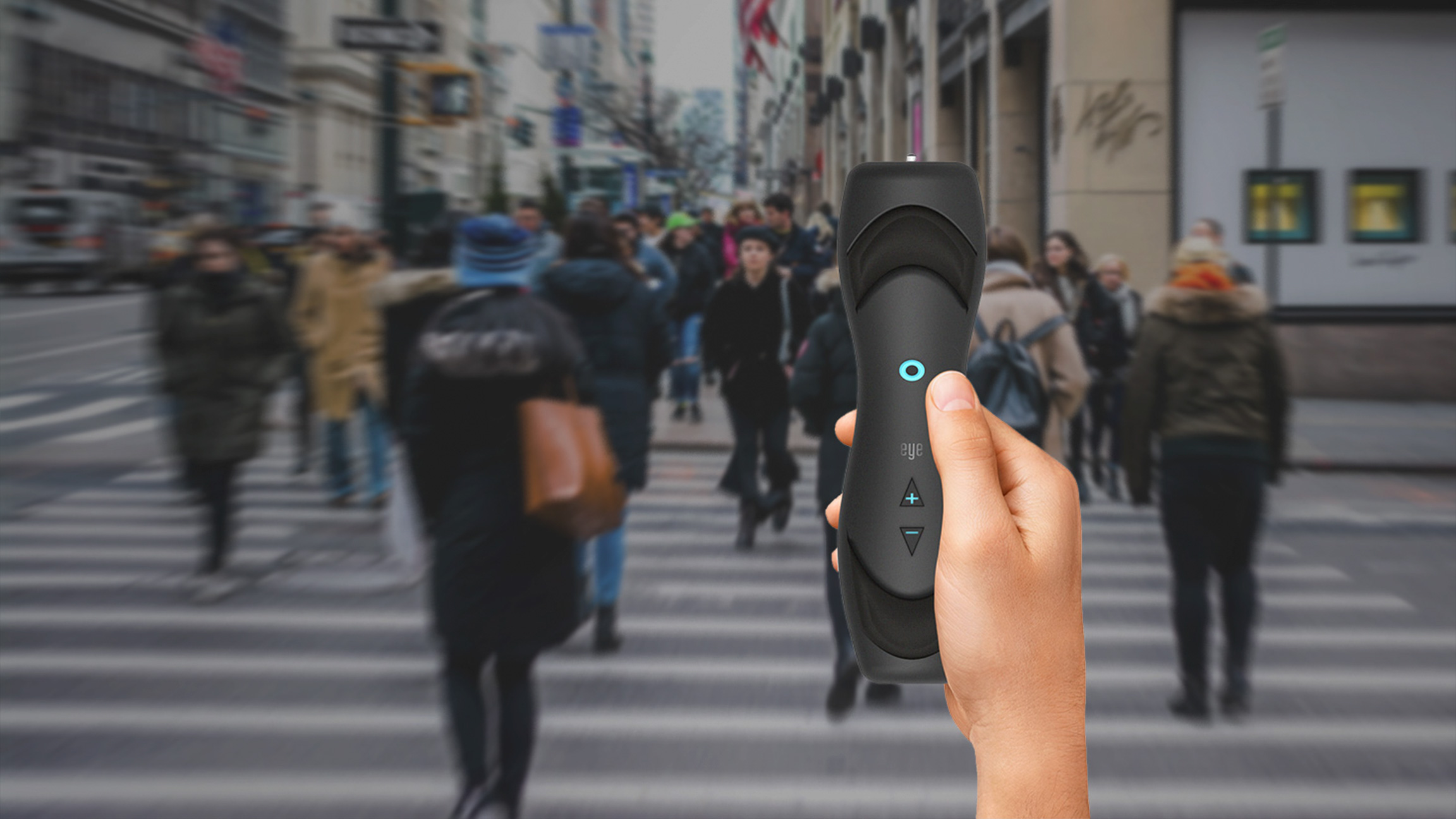
Eye: case study
A reimagined walking cane that uses haptic feedback to make independent movement more intuitive and less intrusive than traditional canes.